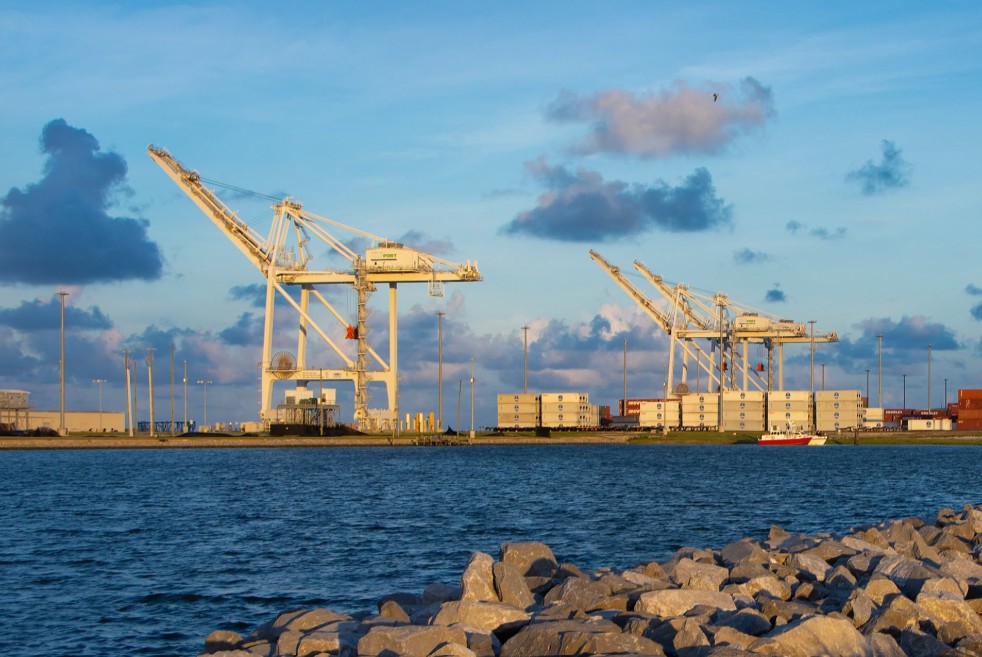
HARRISON COUNTY — The Port of Gulfport has reached a major milestone in its effort to deepen and widen the Gulfport Ship Channel, advancing an estimated $548 million project that officials say would allow larger cargo ships to access the port and strengthen Mississippi’s economy.
The project would deepen the ship channel from 36 feet to 46 feet, increasing the port’s capacity for larger vessels and additional cargo. Port officials said the expansion could create new business opportunities and support more jobs on the Mississippi Gulf Coast.
Jon Nass, CEO and executive director of the Port of Gulfport, said the project moved forward June 9 when the U.S. Army Corps of Engineers signed its Chief’s Report after completing a 3½-year feasibility study.
“That was the conclusion of a 3½-year feasibility study,” Nass said. “Looking at the benefits as well as the cost of a deepening and widening project, getting that signed off on is basically a requirement to receive further authorization.”
The Chief’s Report is required before Congress can consider authorizing the project through the Water Resources Development Act. If authorized, the project would then move into the federal appropriations process, with the federal government expected to fund 75% of construction costs. The remaining costs would be shared by the state and other project partners.
Nass said projects of this size typically take about eight years to complete, but he hopes this one can be finished in six. If approved, the next phases would include engineering and design work before construction begins.
Nass said the expanded channel would have long-term economic benefits for the Gulf Coast by attracting more cargo traffic and supporting employment.
“It means greater economic impact, the ability to have jobs on the Gulf Coast … and not have to move away to get a really good, high-paying job so you can provide for your family,” Nass said.
The Port of Gulfport serves as a gateway for imported fruit destined for much of the central United States, handles breakbulk and bulk cargo, supports the blue economy and military operations, and hosts a variety of maritime activities, according to Nass.
In addition to its commercial operations, the port is a designated strategic seaport with direct rail access to Camp Shelby and a longstanding partnership with the locally stationed Seabees.
Nass said the port’s ability to move cargo quickly has long distinguished it from other Gulf Coast ports.
“That’s a competitive advantage because when people buy components that are going to go into something they’re making, time is money. They want them more quickly, and they want to turn them into finishedproducts as quickly as possible,” Nass said.