The Roy Howard Community Journalism Center’s “What Is True?” team investigated claims that Beauvoir in Biloxi, Mississippi, is selling pirated copies of Disney’s “Song of the South” and hosted a public showing of the movie without proper licensing.
RESULTS: Those claims are misleading.
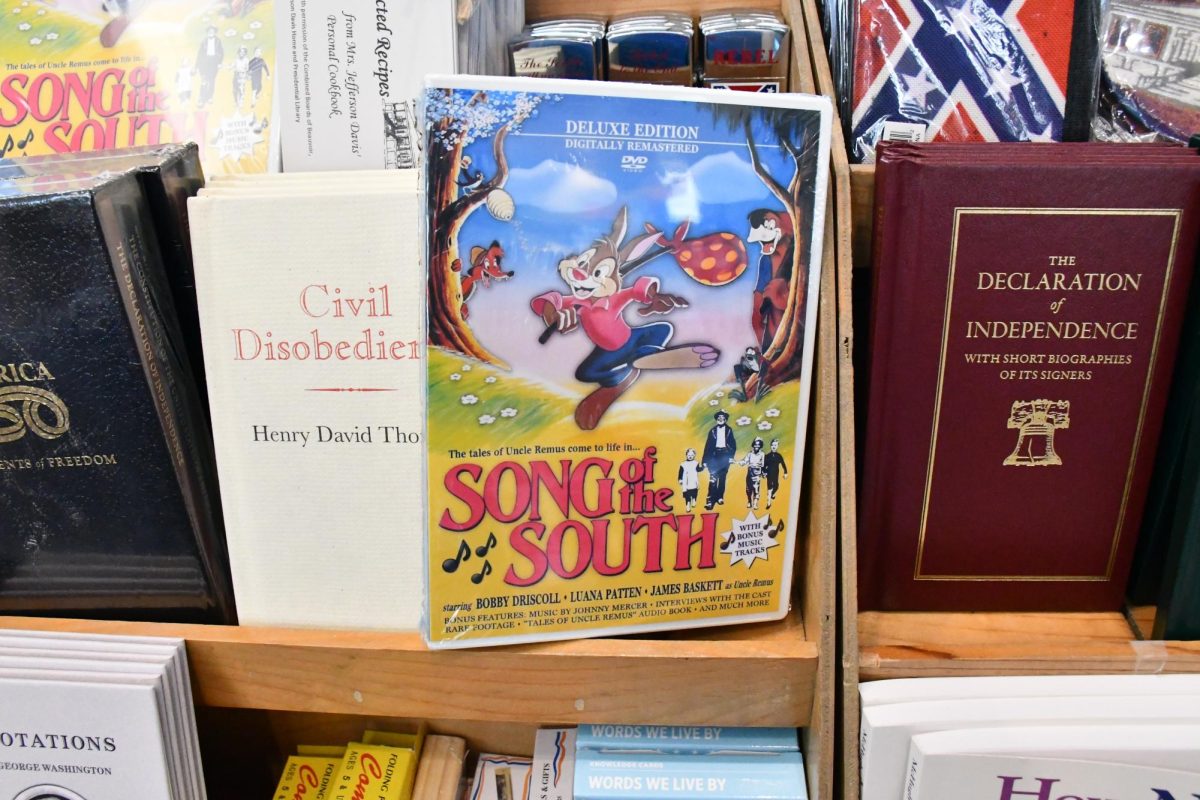
Researchers confirmed Beauvoir is selling copies of “Song of the South” and hosted a public showing of the film. However, they were unable to determine whether the museum obtained the licenses required to sell or publicly screen the movie. To learn more, read the full fact-check below:
Disney released “Song of the South” in 1946. The studio later re-released the film in theaters in 1972, 1981 and 1986. It received two Academy Awards: best original song for “Zip-a-Dee-Doo-Dah” and an honorary Academy Award for actor James Baskett, the first Black man to receive an Academy Award.
Because of longstanding criticism of the film’s portrayal of race and plantation life, Disney has never released “Song of the South” on home video in the United States.
Although people can purchase copies of “Song of the South” today, those copies generally fall into one of two categories: authorized imports from overseas releases or unauthorized reproductions.
Disney officially released the film on home video in several international markets, including parts of Europe and Asia, but never in the United States.
The copies available for sale at Beauvoir do not display a distributor’s name or mark, making it difficult for the “What Is True?” team to determine whether they are authorized imports or unauthorized reproductions.
Mohammed Rashid, an assistant professor at The University of Southern Mississippi School of Media and Communication, said Disney could authorize a third party to distribute its films. However, Disney has made no public announcement that “Song of the South” has been licensed for distribution.
Beauvoir confirmed to the “What Is True?” team that it screened the movie May 30 as part of Jefferson Davis’ 218th birthday celebration and said it has no future screenings planned. However, museum officials did not answer questions about whether they obtained a license to publicly screen the film.
Swank Motion Pictures is one company that licenses public screenings of many Disney films. The “What Is True?” team had not received a response from a Swank representative by the time of publication.
About “What Is True?”
The RHCJC “What Is True?” team of graduate investigators examines everything from viral online posts to local community rumors. If you have a question, submit it through the “What Is True?” inquiry form on the RHCJC website or call 855-IS-IT-TRU (855-474-8878).