The Roy Howard Community Journalism Center’s “What Is True?” team investigated claims that Dixie Alley produces more tornadoes than Tornado Alley.
RESULTS: The claim is misleading.

The data shows that Tornado Alley still produces more tornadoes each year. However, factors such as terrain, storm visibility and detection technology can cause fluctuations in that data. Some scientists also think Dixie Alley has been understudied in the past, skewing the numbers. To learn more, read the full fact check below:
The better-known Tornado Alley covers parts of the Midwest, including northern Texas, Oklahoma, Kansas, Missouri, Iowa, Nebraska, eastern Colorado and even parts of Louisiana. According to AccuWeather, this is a high-tornado-development area known for deadly, devastating storms. Its peak season is from May to early June.
Dixie Alley encompasses parts of the Southeast, including Tennessee, Mississippi, Alabama and Arkansas. Unlike Tornado Alley, the Farmers’ Almanac reports that Dixie Alley has bimodal, or two, peak seasons — February to April and November to December.
The National Oceanic and Atmospheric Administration reported the average number of tornadoes from 2001 to 2025 in Tornado Alley during peak season is about 266. In the same data collection period, Dixie Alley averaged about 156 tornadoes during its combined bimodal seasons.
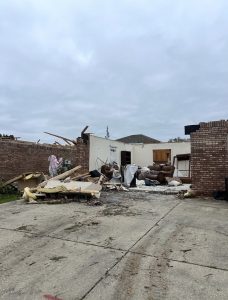
Kendall Junker, a doctoral student at the University of Southern Mississippi, said meteorologists have mainly studied Tornado Alley, but Dixie Alley has come under greater scrutiny in the past few decades. She said there are several reasons the data numbers might be higher in the Midwest beyond just higher occurrence rates. For example, visibility during a storm.
“Tornado Alley also has more visibility because it’s flat,” Junker said. “The tornadoes are more visible than down south and more likely to occur during the daytime.”
Because of the reliance on physical observation, Junker said she believes many tornadoes in Dixie Alley went unreported until better technology was developed.
“The NEXRAD Doppler radar, which is used to detect tornadoes, was not introduced until the 1990s,” Junker said. “So, I think many of the tornadoes in Dixie Alley were missed.”
Fain Storm Shelters also published a report that supports Junker’s observations.
As detection technology improves, the number of tornadoes recorded in Dixie Alley may increase. It will take further study, however, to discern whether this is an increase in occurrence or better data reporting.
About “What Is True?”
The RHCJC “What Is True?” team of graduate investigators examines everything from viral online posts to local community rumors. Submit questions through the “What Is True?” inquiry form on the RHCJC website or call 855-IS-IT-TRU (855-474-8878).