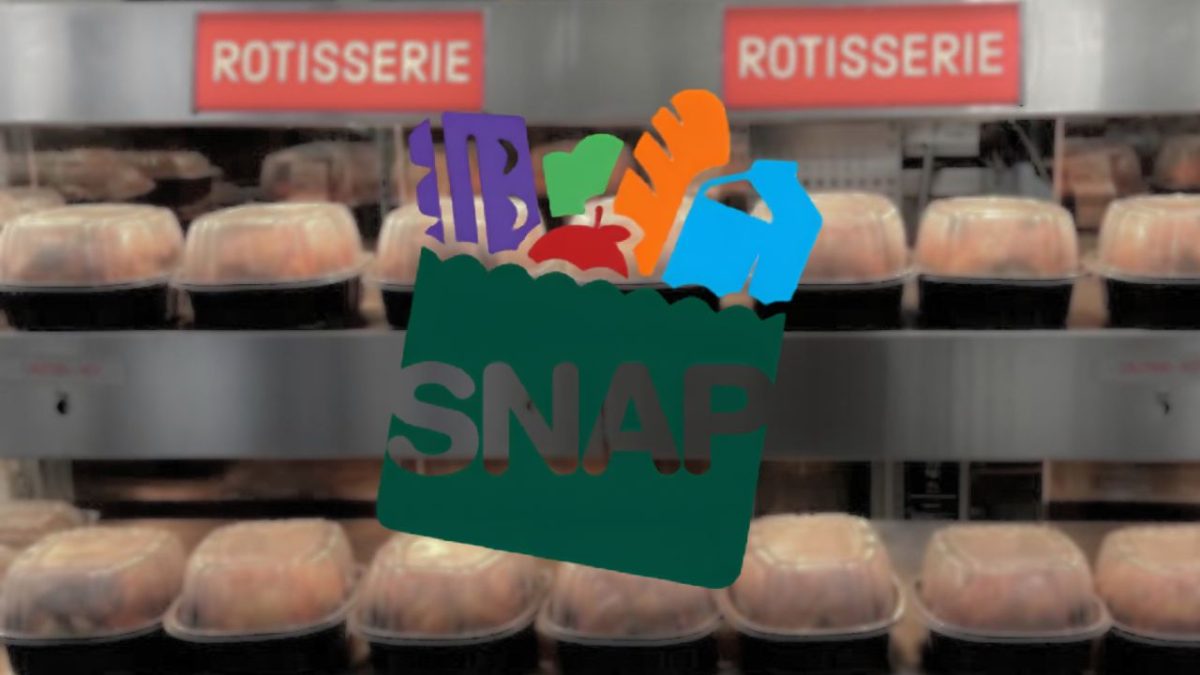
The Roy Howard Community Journalism Center’s “What Is True?” team investigated social media posts claiming Americans cannot buy a hot rotisserie chicken with an Electronic Benefits Transfer card from the Supplemental Nutrition Assistance Program.
RESULTS: This claim is true. For now.
SNAP benefits have traditionally limited the use of funds to items recipients can cook at home, such as fruits and vegetables; meat, poultry and fish; dairy products; breads and cereals; and seeds and plants that can produce food for the household to eat. However, there has been a growing push to add healthy, ready-to-eat options to the program. To learn more about SNAP benefit restrictions, read the full fact-check below.
Most people know that SNAP recipients cannot use benefits to purchase prohibited items such as beer, wine, liquor or items containing controlled substances, including cannabis, marijuana and CBD. However, benefits also cannot be applied to nutritional supplements or any foods that are hot at the point of sale.
Because they are hot, prepared foods found in most grocery stores, such as rotisserie chicken, hot soups, steamed vegetables, warm pasta, ribs or hot dogs, have been barred from SNAP funds since the early 1970s.
On April 20, the U.S. House of Representatives voted to allow rotisserie chicken purchases with food stamps in an amendment to a farm bill. The bill would update the 2008 Food and Nutrition Act, which limits what SNAP benefits can be used for, to add hot rotisserie chicken as a “food.” The bill has been sent to the Senate for consideration.
Low-nutrition items such as snack foods and nonalcoholic beverages also can be purchased with SNAP. However, several states, including Mississippi, are considering legislation or requesting waivers from the U.S. Department of Agriculture’s Food and Nutrition Service.
Mississippi Gov. Tate Reeves has requested waivers to restrict the purchase of items such as soda, fruit drinks with less than 50% juice, candy and certain sugary beverages that list carbonated water, sugar, corn syrup or high-fructose corn syrup as the first two ingredients. If the request is approved by the USDA, these items could be prohibited for EBT purchase as early as January 2027.
About “What Is True?”
The RHCJC “What Is True?” team of graduate investigators examines everything from viral online posts to local community rumors. To submit a question, use the “What Is True?” inquiry form on the RHCJC website or call 855-IS-IT-TRU (855-474-8878).