Key Points
- Moss Point will commemorate its civil rights history through a memorial project led by the Mississippi Humanities Council as part of the Mississippi Freedom Trail.
- The Witness: The Freedom Memory Project aims to highlight communities whose civil rights contributions have received less recognition, with additional memorials planned for McComb, Jackson, and Drew.
- John Davis, a Moss Point native who participated in the 1964 Freedom Summer at age 17, is sharing his experiences for the project.
- Freedom School classes in Moss Point during the 1964 campaign were held at Victory Lodge and the Knights of Pythias Hall, teaching Black history and voter education.
- Organizers estimate the memorial project could take two to three years, with ongoing efforts to collect oral histories from community members.
MOSS POINT — Moss Point will soon commemorate its role in the civil rights movement through a memorial project led by the Mississippi Humanities Council.
The memorial will become part of the Mississippi Freedom Trail, which includes more than 30 sites recognizing people and places connected to the civil rights movement. John Spann, strategic operations coordinator for the Mississippi Humanities Council, said the Witness: The Freedom Memory Project focuses on communities whose civil rights history has received less public recognition. Memorials are also planned for McComb, Jackson and Drew, and applications for future projects are expected to open in 2027.
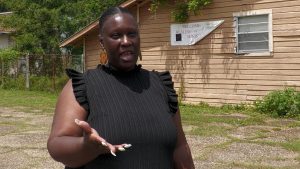
“It’s really to design a monument of some sort to honor these towns’ civil rights history that may not be as well-known,” Spann said. “We collect oral histories of folks who either have lived experiences, they knew the people that are being uplifted, they’ve lived in the time period and can express how life was back then and can speak to what people were going through and why it’s important to memorialize (those stories).”
Moss Point native John Davis is among those sharing his experiences. At 17, Davis volunteered during Freedom Summer, the 1964 campaign organized by civil rights groups including the Council of Federated Organizations and the Student Nonviolent Coordinating Committee to register Black voters and expand voter education across Mississippi.
In 1962, fewer than 7% of eligible Black Mississippians were registered to vote because of barriers including Jim Crow laws and voter intimidation. More than 700 volunteers participated in Freedom Summer, a campaign historians credit with helping build momentum for the Civil Rights Act of 1964 and Voting Rights Act of 1965.
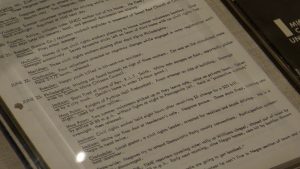
Davis served as a troubleshooter, travelling across Mississippi to help organize voter registration efforts and address challenges in other counties. He said working alongside civil rights leaders like Bob Moses and Kwame Ture changed his understanding of segregation.
“That was the greatest experience in my life. It opened my eyes to what’s going on in the world, in this nation, in this state, and in my city,” Davis said.
Remembering Freedom Summer
Many of the sites associated with Freedom Summer in Moss Point remain standing.
Freedom schools, often held in churches and other community spaces, provided instruction in Black history, civics and voted education during the 1964 campaign.
Davis said attending a Freedom School in Moss Point introduced him to information about voting and voting registration that he had not learned in school.
“We had civics, but they didn’t teach us anything about voting, anything about participating in the system,” Davis said. “It wasn’t allowed then, not in the Black schools.”
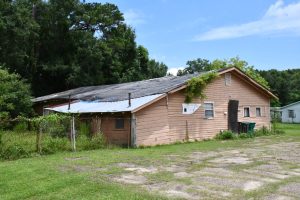
Moss Point organizers held Freedom School classes at Victory Lodge on Bowen Street, while the Knights of Pythias Hall — also known as the KP Building — hosted mass meetings, social events and performances by artists including James Brown and B.B. King.
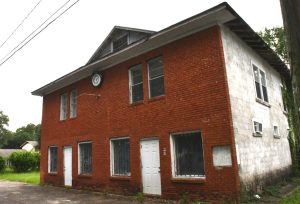
Neither building has a historical marker recognizing its role in the civil rights movement, and several historic buildings in Moss Point have fallen into disrepair.
“We didn’t take enough interest in places. We couldn’t see that far down the road at that time,” Davis said. “They didn’t realize the historical value of places then the way they do now.”
Davis described Moss Point as a community that responded actively to challenges during the civil rights movement.
“Moss Point was always aggressive. They would always go out and attack the situation and try to bring about a change whenever they could,” Davis said.
Anne’ McMillion, the Mississippi Humanities County’s community lead for the Moss Point project, agreed.
“Moss Point was one of those cities that was a fighter,” McMillion said. “You couldn’t come to this area and start dictating what you wanted to occur and happen because the individuals that lived here … they come from a bloodline of fighters.”
Planning the memorial
Spann said the project’s goal is to document civil rights history in smaller Mississippi communities through memorial and oral histories.
“It all connects to the larger story of America’s civil rights movement,” Spann said. “Mississippi was a big part of that.”
Community members and project organizers are meeting regularly to collect oral histories and discuss the memorial’s design. Their next meeting is scheduled for July 23 at the Moss Point Library
McMillion said preserving those stories is as important as preserving buildings.
“It brings a lot of identity, self-pride. Also, the (continuation) of history,” McMillion said. “When the houses or buildings are no longer here standing, what else do you have that documented and showed you exactly what occurred and happened?”
McMillion estimated the project could take two to three years, although Spann said the council has not established a deadline for completion.
Organizers expect to spend much of that time collecting oral histories to help shape the memorial.
“That way we’re able to show that this is a project that supports the community, but it’s also about the community,” McMillion said. “It’s not a project where we’re developing something that we have no connection to.”
McMillion said many residents have welcomed the effort.
“So, so many have shared the delight that it’s finally time,” McMillion said. “A lot of them feel it’s been past that time, it’s overdue, but thank God, we got it now.”