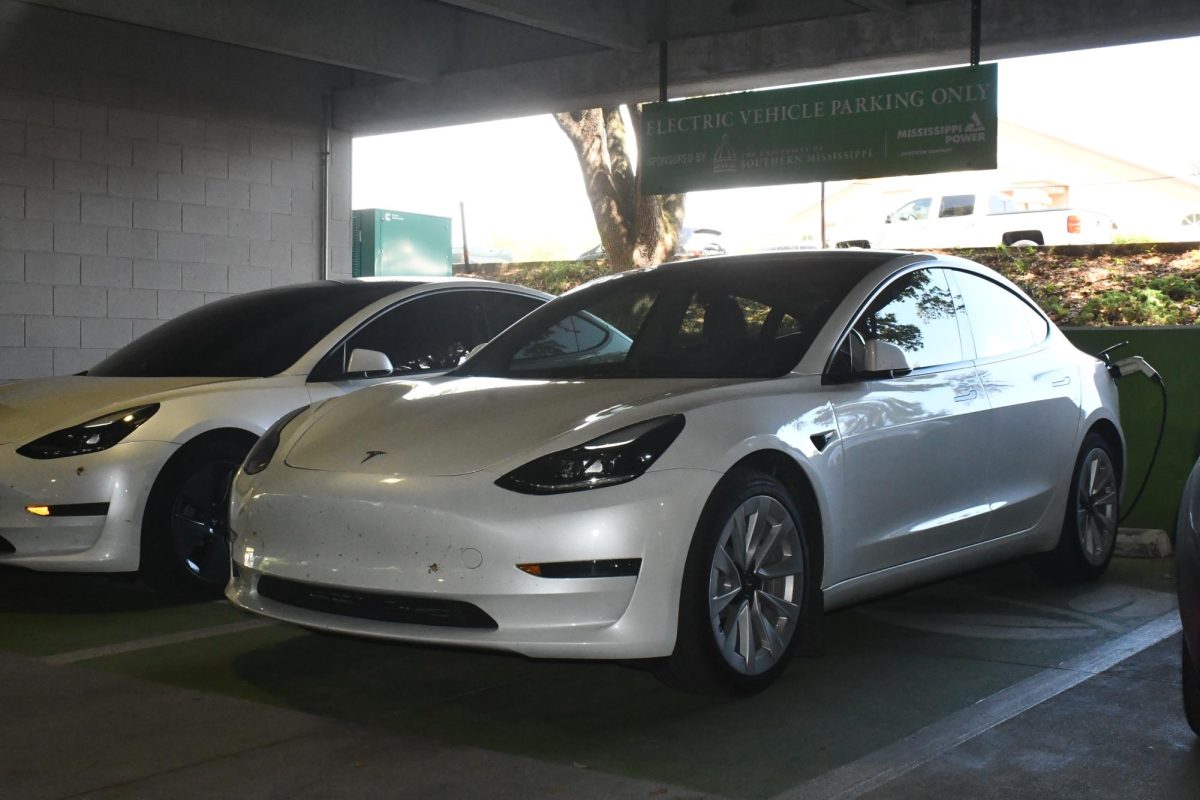
The Roy Howard Community Journalism Center’s “What Is True?” team investigated claims that electric vehicles have a smaller impact on the environment and lower consumer costs.
RESULTS: These claims are true.

For more than 100 years, the gas-powered engine has been the king of the road, but in 2026, the rise of electric vehicles has created a real choice for drivers. Choosing between them is not just about being “green.” It really depends on how you use your vehicle every day. To learn more about how gas engines compare with EVs, read the full fact-check below:
The cost: Pay now or pay later?
Gas-powered vehicles are usually cheaper to buy upfront, but EVs are much cheaper to run. Gasoline costs about 15 cents per mile, while charging an EV at home costs about 4 cents per mile. EVs also do not need oil changes or other maintenance required by gas engines. These savings allow most EV owners to eventually break even on the higher purchase price within three years.
Environment: A tale of two systems
The environmental debate over gas engines vs. electric vehicles usually centers on the natural resources used to build and power the cars.
Traditional gas engines use a “burn-and-lose” linear system. Companies drill for oil and turn it into gas that cars burn for energy. Once the natural resource is gone, it is gone forever. The residual exhaust fumes may stay in the air, but companies must keep drilling for more oil to keep the cars moving.
EVs, however, use a “mine-and-keep” circular system. Lithium is not fuel; it is like a “box” that holds energy, allowing it to be recycled repeatedly. Currently, 98% of an old battery can be recycled to make a new one.
Even when charging lithium batteries, EVs have a lower environmental impact than traditional gas engines. Most electricity comes from a mix of natural gas, nuclear power and renewables. However, even if an EV is charged by a natural-gas-only plant, it uses about half the total energy to travel 1 mile as a gas car.
As the power grid continues adding more wind and solar power, every EV on the road becomes “cleaner” automatically.
Reality check: Range and refueling
While EV fast chargers are popping up across the country, they are still not available everywhere and take about 20 minutes to provide a decent charge.
For long trips and heavy work, gas engines are still the big winners. It takes only about five minutes to fill a gas tank, and gas is available almost anywhere. If you live in a rural area or tow heavy trailers, the gas engine is still the most practical “workhorse.”
About “What Is True?”
The RHCJC “What Is True?” team of graduate investigators examines everything from viral online posts to local community rumors. If you have a question, submit to “What Is True?” inquiry on the RHCJC website or call 855-IS-IT-TRU (855-474-8878).