The Roy Howard Community Journalism Center’s “What Is True?” Team investigated the online claims that gamblers could take advantage of loopholes in a new Mississippi law that would garnish winnings for unpaid child support.
RESULTS: These claims are false.
The new law does not go into effect until July 1, 2026. At this time, the Mississippi Gaming Commission says they are not aware of any legal loopholes. To get a better picture of how the law will work, read the full fact-check below:
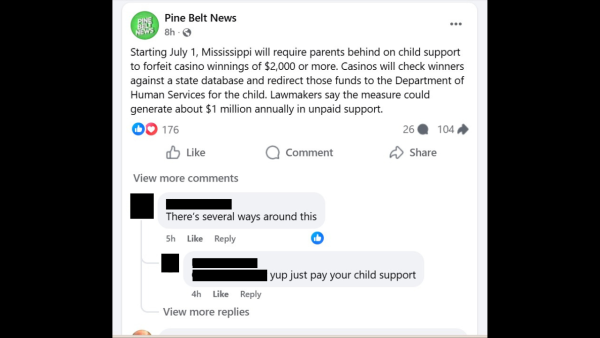
The Facebook news page Pine Belt News reported that, beginning July 1, 2026, Mississippi casinos will collect child support on jackpots over $2,000. The comment section quickly filled up with suggested loopholes and ways around the law.
Under Senate Bill 2369, players who win a jackpot of $2,000 or more will have their identity checked against a state database. If the winner owes past-due child support, the casino will withhold the money to pay off that debt before the winner receives any remaining cash. The bill specifically targets “taxable” wins from slot machines and in-person sports betting. Table games, such as poker, craps, and blackjack, are currently excluded from these interceptions.
Clark Pegg, a program specialist supervisor and fleet manager at the Mississippi Gaming Commission, said the commission is not aware of any legal loopholes at this time.
“I cannot comment on what that individual may believe to be true,” said Pegg. “However, since the system is not yet operational, I am not aware of any vulnerabilities they may be referencing. Aside from fraudulently submitting false identification upon winning a jackpot, we do not foresee any way for individuals to evade withholding if the DHS database confirms that they owe child support. Additionally, submitting fraudulent identification carries its own risks, especially as it involves providing false information for tax identification purposes to both the IRS and the Mississippi Department of Revenue.”
Mark Jones, the Mississippi Department of Human Services chief communications officer for the child support division, said there is a way for people to contest the garnishment if they feel it is in error.
“If the obligor wishes to appeal the intercept, a written request for a hearing must be made within 30 days after the funds are encumbered,” said Jones. “The obligor can raise a challenge based on mistaken identity or mistaken amount of arrearage. If there is no appeal, the estimated timeline for disbursal of child support funds is 30 days after the funds are encumbered.”
The only “legal” loophole RHCJC researchers found among those suggested on social media was to stop gambling before hitting the $2,000 mark. Other suggestions were either outside the scope of this specific law or involved illegal activity, such as identity fraud.
MDHS and the Gaming Commission will monitor the results of the new program after it goes into effect on July 1.
About “What Is True?”
The RHCJC “What Is True?” Team of graduate researchers investigates everything from viral online posts to local community rumors. If you have a question, submit a “What Is True?” inquiry on the RHCJC website or call 855-IS-IT-TRU (855-474-8878).