Key Points
- Mississippi’s new UPSKILL pilot program will provide last-dollar tuition funding and a $500 textbook stipend to people recovering from opioid addiction who seek jobs in priority career pathways.
- The pilot will use $1 million from Mississippi’s share of the national opioid settlement and is available only to Mississippians in opioid recovery during the pilot phase.
- Accelerate MS, the state’s workforce office, will determine which academic programs are eligible based on identified priority occupations that pay at least $20 per hour.
- Jackson and Harrison counties accounted for about 40% of the state’s 314 overdose deaths, with Jackson County recording the highest total of 74 suspected overdose deaths.
- After the UPSKILL pilot concludes, the Legislature will evaluate its viability and consider statewide implementation for the 2028–29 academic year.
JACKSON — Mississippians recovering from opioid addiction could soon get help paying for community college under a new state pilot program.
House Bill 562 creates the UPSKILL pilot program, which offers last-dollar tuition funding and a $500 textbook stipend for eligible participants training for jobs in Mississippi’s priority career pathways.

The pilot will use $1 million from Mississippi’s share of the national opioid settlement. Because it draws from those funds, the program will be available only to Mississippians recovering from opioid addiction during the pilot phase. After it concludes, lawmakers will decide whether to fully implement it for the 2028-29 academic year.
Sen. Nicole Boyd, who authored HB 562, said stable employment and economic opportunity are important factors for people recovering from opioid addiction. She said the program fits with Mississippi’s broader efforts to address the opioid epidemic.
“(This pilot) fits very well with the UPSKILL program because it’s basically about meeting people where they are and providing them with a pathway to opportunity,” Boyd said.
For Mississippians in recovery, stable employment in skilled fields can provide routine, self-worth and a sense of purpose that may help support long-term sobriety.
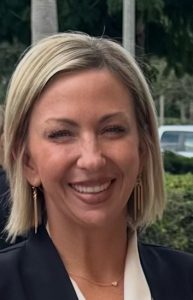
Maggie Woodard, who grew up in Brandon, started using drugs at 15. By 16, she was addicted to Xanax, and a few years later progressed to heroin and fentanyl, substances she has been in various stages of recovery since ever since. During her longest period of sobriety, Woodard held three jobs at once and said the heavy workload helped her stay sober.
“I took on these other jobs because really it was key for me to stay busy and not have a lot of downtime. Boredom was one of my identifiable triggers,” Woodard said. “(Working) gave me a sense of self-worth. It gave me a sense of pride. Going from never being able to hold a job to holding a job and two side jobs and working for what I want showed me, ‘OK, I can do more.'”
With that sense of accomplishment, Woodard completed a program with the Mississippi Coding Academies, which she said gave her hope that she could build a career despite her struggle with addiction.
“(Completing a program with MCA) gave me such a sense of accomplishment, because I just thought school just isn’t for me,” Woodard said. “That showed me I could have a career one day.”
Meeting them halfway
Accelerate MS, Mississippi’s office of workforce development, will determine which academic programs the state can fund through the UPSKILL pilot. The office is identifying Mississippi’s priority occupations, which Executive Director Courtney Taylor described as growing, nongovernment, nonretail career paths that pay at least $20 per hour and support Mississippi’s infrastructure needs.
Once that list is finalized, Accelerate MS will determine which community and junior colleges offer related programs and pass that list to the state.
Career choice can also shape recovery. Stand Up Mississippi identifies construction, farming, manufacturing, hospitality, and oil and gas as particularly high-risk fields for opioid addiction. Woodard, who worked at a restaurant in Jackson for nine years, said food service came with easy access to drugs and pressure to use them.
“Whether it’s in the kitchen or the waitresses or waiters, everybody’s doing something. They’re either selling it, they know where to get it, or they’re using it,” Woodard said.
At that time, Woodard said she traded her prescription Adderall with other workers for Xanax or money to buy it. Her Xanax use became tied to her self-perception as an employee and her ability to cope with workplace stress.
“It just made me able to talk to people, to really not mind being there, and I felt like I did my job better,” Woodard said. “I didn’t mind going to work as long as I had what I needed.”
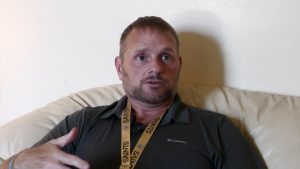
Trey White, a recovering addict and a peer support specialist at Mississippi State Hospital, said peer pressure can lead to relapses.
“My boss (at the time) was very supportive of my recovery, but everybody we were around drank, or they talked about drinking on the weekends,” White said. “After two years, I started think, ‘Well I’m not really any different than these people’ — you kind of forgetthrough that, and that led me to my relapse.”
Taylor said Accelerate MS will consider participants’ backgrounds while they are in the UPSKILL program to avoid placing them in situations that could increase the risk of relapse.
“Priorities are the priorities, period, regardless of the human capital and what challenges they bring with them,” Taylor said. “We would consider (individual backgrounds). We’re not going to purposely put people at risk of relapsing or getting into negative situations.”
To help do that, Taylor said Accelerate MS will lean on companies like McCrary-West in Columbus and Thermo-Kool in Hattiesburg, which employ many Mississippians recovering from drug addiction. Thermo-Kool was certified as a recovery-friendly workplace by the National Recovery Friendly Workplace Institute in 2025.
“If they’re meeting us halfway, we want to support them while they’re there,” Taylor said.
Why it matters in Mississippi
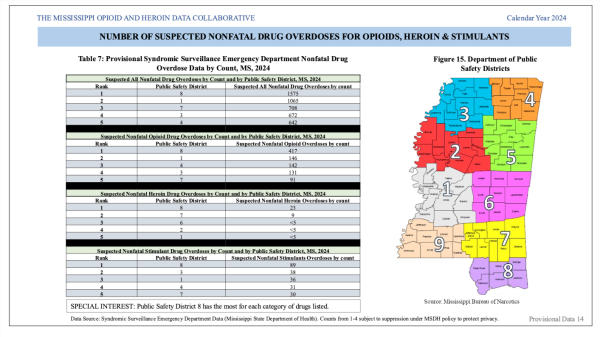
The opioid epidemic remains especially severe in southeast Mississippi. A 2024 joint report from the Mississippi Opioid and Heroin Data Collaborative found that Hancock, Harrison, Jackson, Pearl River, Stone, and George counties — Public Safety District 8 — had the highest nonfatal overdose total and rate per 100,000 residents of any district in the state.
Jackson County recorded 74 suspected overdose deaths, the highest total in Mississippi. Harrison County recorded 52. Together, those two counties accounted for about 40% of the state’s 314 overdose deaths.
The pilot also arrives as Mississippi continues to face criticism over how opioid settlement money has been spent.
Mississippi is set to receive more than $256 million by 2038 through national opioid settlement litigation. As Mississippi Today reported in September 2025, the state government controls $109 million of the overall settlement and had spent around $20 million on attorney fees. Local governments across the state had received about $15.5 million and spent $6.3 million, but only $944,626 of those expenses had gone toward programs aligned with the settlement’s core opioid abatement strategies.
During the 2025 session, the Legislature created an Opioid Settlement Advisory Council. In December 2025, the council released recommendations that allocated more than $195 million in grants to organizations across Mississippi. Roughly $90 million of that total was dedicated to direct opioid abatement strategies.
Still, legislators have supported some projects outside that recommendation process, including the UPSKILL pilot. Boyd said the program addresses a gap in the state’s response.
“As we looked into the programs that were suggested for funding, there was really a need for programs that were work-focused,” Boyd said. “We talked to a lot of recovery experts behind the scenes and felt like this was a missing piece.”
White said work-focused programs could be beneficial as long as there is oversight.
“It’s absolutely a good approach,” White said. “You have to do it in a long-term setting … there needs to be mentorship, and you need to have people in your life … (that) are able to walk with you in those moments.”
After the UPSKILL pilot concludes, the Legislature will examine the program’s viability and determine whether to implement it across the state.