Key Points
- Lamar County’s population has grown from about 15,000 residents in 1970 to nearly 65,000, resulting in a surge in emergency calls.
- The Northeast Lamar Fire Station averaged 180 calls per year in 1990, compared to about 900 calls per year now.
- Lamar County currently has 26 fire stations, staffed mainly by 180 volunteer firefighters and some career firefighters during the day.
- Lamar County invested $1 million in a fire training center that opened in 2023 and has trained about 2,800 people as of summer 2025.
- According to Fire Coordinator Kyle Hill, about 98% of the fire department’s calls are medical in nature rather than fire emergencies.
LAMAR COUNTY — As Lamar County’s population continues to rise, emergency officials say fire and medical services are facing a sharp increase in call volume, straining staffing needs while prompting new investments in training and preparedness.
Since 1970, the county’s population has climbed from about 15,000 residents to nearly 65,000, according to World Population Review. Lamar County Fire Coordinator Kyle Hill said that growth has translated directly into a surge in emergency calls.
Calls surge along with population
“When I joined the department in 1990, we probably ran 180 calls,” he said. “Since then, this department here at Northeast (Lamar Fire Station) is averaging 900 calls a year.”
Hill said the growth accelerated after Hurricane Katrina in 2005, when many Mississippians relocated inland.
“That’s really when the county started getting its growth,” Hill said. “Ever since then it’s just been very steady — just a steady incline.”
Some residents say they have seen the effects of that growth in emergency response. Brian Street, who has lived in the area since 2004, said response times have improved.
“Over the recent years it’s gotten a lot better,” Street said. “I witnessed an accident happen, and the timeliness (of their response) seemed to be pretty solid. Now, I can’t say that about years ago.”
Staffing, fire station coverage remain challenges
Lamar County currently has 26 fire stations, most of which are operated by volunteers.
“Most of those are 180 volunteer firefighters spread out (across) the county, but we do have career firefighters at most of our stations throughout the day,” Hill said.
Hill said the county generally meets national coverage standards, with most residents living within five miles of a station.
“We’ve kind of planned ahead and we’re probably in good shape, but things could continue to happen that would cause us to have to build a few more,” Hill said. “We do have some pockets where if a subdivision goes and pops up and they were to build up, we probably would have to put another fire station.”
Despite the county’s current reach, Hill said recruitment remains one of the department’s biggest challenges.
“Getting folks in to want to give back to their community, especially as volunteers, it’s just difficult to do,” he said. “How do we keep them and have them serve?”
Training expands to meet increased needs
As population growth continues, training demands have also increased.
“Fire doesn’t care if you’re getting paid or not paid,” Hill said. “The biggest thing is making sure that our volunteers are trained.”
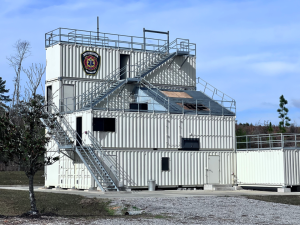
Lamar County invested $1 million in a fire training center that opened in 2023. The facility now serves first responders across the region.
“The volunteers do put a lot of time into it,” Hill said. “We had people from Marion County, Forest County, Covington County, Lamar County, Stone County, Pearl River County — all in that class that we were able to offer for free.”
As of summer 2025, the center has trained about 2,800 people, according to Hill, both in fire response and emergency medical services.
“The term ‘fire department’ really doesn’t describe what we do,” he said. “The largest part of what we do is probably medical calls. It makes up probably about 98% of what the fire department is.”
Hill said that shift reflects a nationwide trend.

“Many of our firefighters and even our volunteers are trained as first responders or maybe even as EMTs,” Hill said. “When (residents) don’t know who to call, they call the fire department because we’re going to solve the problem. We’re going to take care of it.”
While they plan for the future, he said they’re working closely with county leaders to track new developments and prepare for more expansion.
“We work with the county to identify those areas of growth,” Hill said. “The county is in a good place thanks to … the board of supervisors, to have a good understanding of where the growth is happening and how to control that.”