The Roy Howard Community Journalism Center’s “What Is True?” team investigated claims that flesh-eating maggots are back in the United States.
RESULT: True

Federal officials have confirmed that the New World screwworm, a flesh-eating parasite eradicated from the U.S. in 1966, has returned. Read the full fact-check below:
According to the U.S. Department of Agriculture, officials confirmed on June 3 that New World screwworm larvae were found in the umbilical area of a 3-week-old calf in Zavala County, Texas. Since that initial detection, the USDA has confirmed additional cases in Texas and New Mexico, including infestations in cattle, goats and a dog. Federal officials continue surveillance and eradication efforts to prevent the parasite from becoming reestablished in the U.S.
According to the American Veterinary Medical Association, New World screwworm larvae feed on the living tissue of warm-blooded animals. Adult female flies lay eggs in open wounds or natural body openings. After hatching, the larvae burrow into living tissue, causing painful injuries that can become severe or fatal if left untreated.
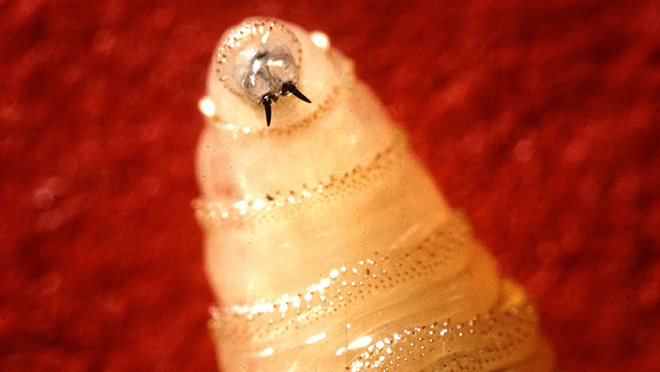
The USDA reports it has been preparing for the parasite’s northward spread for several years as cases increased in Central America and Mexico. The Centers for Disease Control and Prevention confirmed the current outbreak began in Central America in 2023 and spread north through Mexico before reaching the United States in 2026.
To contain the outbreak, the USDA established a 12.4-mile movement control zone around the initial Texas detection and is releasing sterile male flies. Because female screwworm flies typically mate only once, the sterile males prevent future generations from developing.
According to Washington State University Extension, a widespread outbreak could have significant economic consequences. The university estimates that a 1976 outbreak in Texas caused about $330 million in livestock losses and control costs.
Although New World screwworm primarily affects livestock and wildlife, the CDC says it can also infest pets and, in rare cases, people. The agency has not reported locally acquired human infestations in the United States during the current outbreak.
The USDA advises livestock owners, veterinarians and animal caretakers to watch for wounds that do not heal, maggots in wounds, tissue damage, unusual head shaking, a foul odor or irritated behavior. Officials also recommend promptly treating open wounds and protecting newborn animals by treating calf umbilical cords with approved products when appropriate.
For more information, visit the CDC’s New World Screwworm information page or the USDA Animal and Plant Health Inspection Service website.
About “What Is True?”
The RHCJC “What Is True?” team of graduate investigators examines everything from viral online posts to local community rumors. If you have a question, submit it through the “What Is True?” inquiry form on the RHCJC website or call 855-IS-IT-TRU (855-474-8878).