The Roy Howard Community Journalism Center’s “What Is True?” team investigated a reader’s question about whether above-ground tornado shelters can withstand an EF5 tornado.
RESULTS: It’s true.

Most reports show that above-ground storm shelters are extremely safe and have a high survivability rate. To learn more, read the full fact check below.
In early May 2026, several tornadoes affected southeast Mississippi. The Mississippi Emergency Management Agency reported storms damaged 403 homes statewide, including 78 that were destroyed.
Southeast Mississippi is no stranger to storms like the recent tornado outbreak, and weather-tracking technology provides more advanced warnings than in past decades. However, warnings only help if people have a place to go for protection.
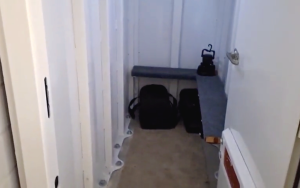
According to Jackson, Mississippi, shelter installer Torshel, above-ground tornado shelters offer a more affordable but still effective option for most homeowners.
“Torshel’s products are designed to withstand the strongest tornadoes,” a Torshel representative said. “Our shelters are not intended to be used for protection against fire, floods or storm surges. Our units have been designed to protect against flying debris, wind uplift and crushing forces that extreme weather can cause.”
Structural forensics from historic outbreaks — such as the 2011 super outbreaks in Joplin, Missouri, and Tuscaloosa, Alabama — show high structural integrity and safety from above-ground shelters.
According to data tracking by the Federal Emergency Management Agency, no one has ever been killed or severely injured inside an above-ground storm shelter that meets FEMA P-320 or P-361 construction guidelines. FEMA officially states that safe rooms built to these standards provide “near-absolute protection.”
To earn an EF5 rating, these steel or reinforced concrete shelters must pass rigorous testing at the National Wind Institute. Shelters must withstand 250 mph winds and direct impacts from a 15-pound wooden plank fired from an air cannon at 100 mph. Forensic tests show that most shelters can even withstand a 3,000-pound vehicle being lifted and dropped directly on top of them.
MEMA is offering reimbursement grants to help Mississippi homeowners install FEMA-compliant safe rooms. Funding is through FEMA’s Hazard Mitigation Grant Program.
About “What Is True?”
The RHCJC “What Is True?” team of graduate investigators examines everything from viral online posts to local community rumors. If you have a question, submit it to the “What Is True?” inquiry form on the RHCJC website or call 855-IS-IT-TRU (855-474-8878).