The Roy Howard Community Journalism Center’s “What Is True?” team investigated claims on social media that eliminating the penny will make products and services more expensive.
RESULTS: These claims are misleading.
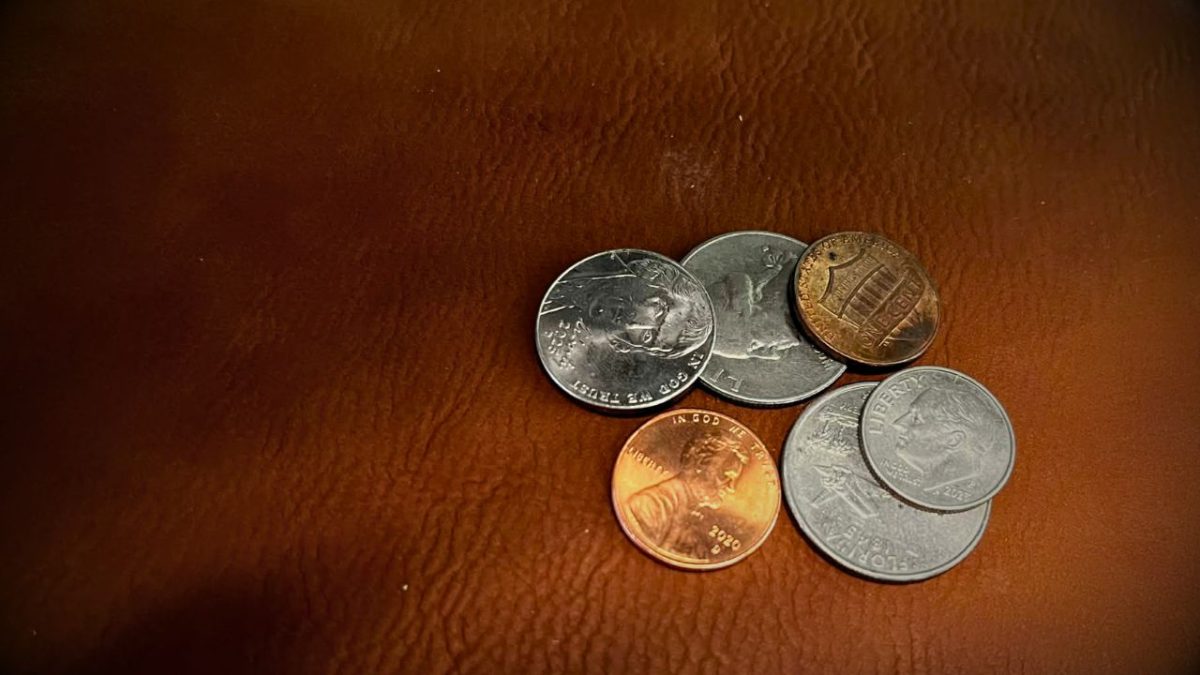
Change is coming to your change. For 232 years, the penny was a standard of American coinage, but its rapid elimination in 2025, along with a lack of federal guidance, has businesses and consumers wondering what to do when they are left penniless. To learn more about how people are dealing with this penny problem, read the full fact-check below:
The penny is not extinct yet. While the U.S. Mint stamped its last penny on Nov. 12, 2025, the Federal Reserve will continue to recirculate the roughly 114 billion coins currently in existence for as long as possible. How long that supply remains depends largely on consumer behavior.
According to the Federal Reserve’s 2025 Diary of Consumer Payment Choice, the vast majority of transactions in the United States would be unaffected by the gradual disappearance of the penny and would save the federal government $56 million.
About 86% of nationwide transactions are paid by credit card (35%), debit card (30%) and other financial instruments, such as checks and mobile payments (11%). For the remaining 14% of transactions made with cash, the elimination of the penny could have a costly cumulative impact.
According to research by the Federal Reserve Bank of Richmond, economists estimate that rounding change will cost American consumers an additional $6.06 million annually in a “rounding tax” — averaging 2 cents per person nationwide. However, the brunt of the cost would be carried by the estimated 9 million Americans who use cash for all their transactions.
Teresa Rogers, branch manager of Regions’ Arbor location in Hattiesburg, said the branch got its last delivery of pennies in February.
“We can’t order any more,” she explained. “Their [the Federal Reserve’s] vault is empty, so what we have is what we have.”
The branch limited business customers’ weekly withdrawals of pennies to help extend their supply, but Rogers said it was just staving off the inevitable.
Slowly, signs of a shortage are appearing across south Mississippi, particularly at establishments where lower prices prompt more cash transactions. At a Pine Belt-area McDonald’s, signs describing rounding practices up or down to the nearest nickel have been posted for a month. However, some customers still reported getting pennies back as change as late as April 14, 2026.
Across town, Rouses Market in Hattiesburg posted a penny policy stating that all cash transactions will be rounded up to the nearest nickel.
“We phased out pennies after the U.S. Mint stopped producing them, and we couldn’t get them from the bank,” said Marcy Nathan, creative director for Rouses. “Our round-up policy is designed so the customer always comes out ahead.”
Nathan said the company never considered rounding down because it wanted to put customers first and make it easier for cashiers to calculate change.
To date, there is no federal legislation establishing rules for eliminating the penny.
US Treasury guidance officially states: “Businesses should apply rounding practices in a fair, consistent, and transparent manner. How states and localities will ultimately amend their sales tax laws is the right and responsibility of those jurisdictions.”
About “What Is True?”
The RHCJC “What Is True?” team of graduate investigators examines everything from viral online posts to local community rumors. If you have a question, submit to “What Is True?” inquiry on the RHCJC website or call 855-IS-IT-TRU (855-474-8878).